
For designers who want better roles, not just more work.
A weekly email on portfolio and career strategy to help you stand out, communicate your thinking, and get hired into better roles.
Free. Sent every Tuesday. Unsub anytime.
See sample issue
Trusted by 500+ designers
★★★★★
I negotiated myself into a slightly higher base salary and accepted the design position! This wouldn't have been possible without your thoughtful guidance. Thank you, Anthony
Natasha / Product Designer, Washington D.C.
I GOT THE DESIGN JOB!!!!! AHHHHHHH! I’m over the moon!!! Thank you so much for your help, Anthony!! I couldn’t have done it without your guidance.
Emily / UX Designer, New York
I just wanted to thank you for your help and guidance, Anthony and let you know that I got a job!Thank you for helping build up my confidence and for starting my design journey on the right foot!
Jason / Product Designer, New York
Anthony helped me make the transition from graphic designer to UX designer so much easier than I thought.
Gemma / UI Designer, Toronto


The weekly email for designers serious about leveling up.
Better jobs. Stronger portfolios. More confidence.
Free. Every Tuesday. Unsubscribe anytime.
Anthony Faria © 2026

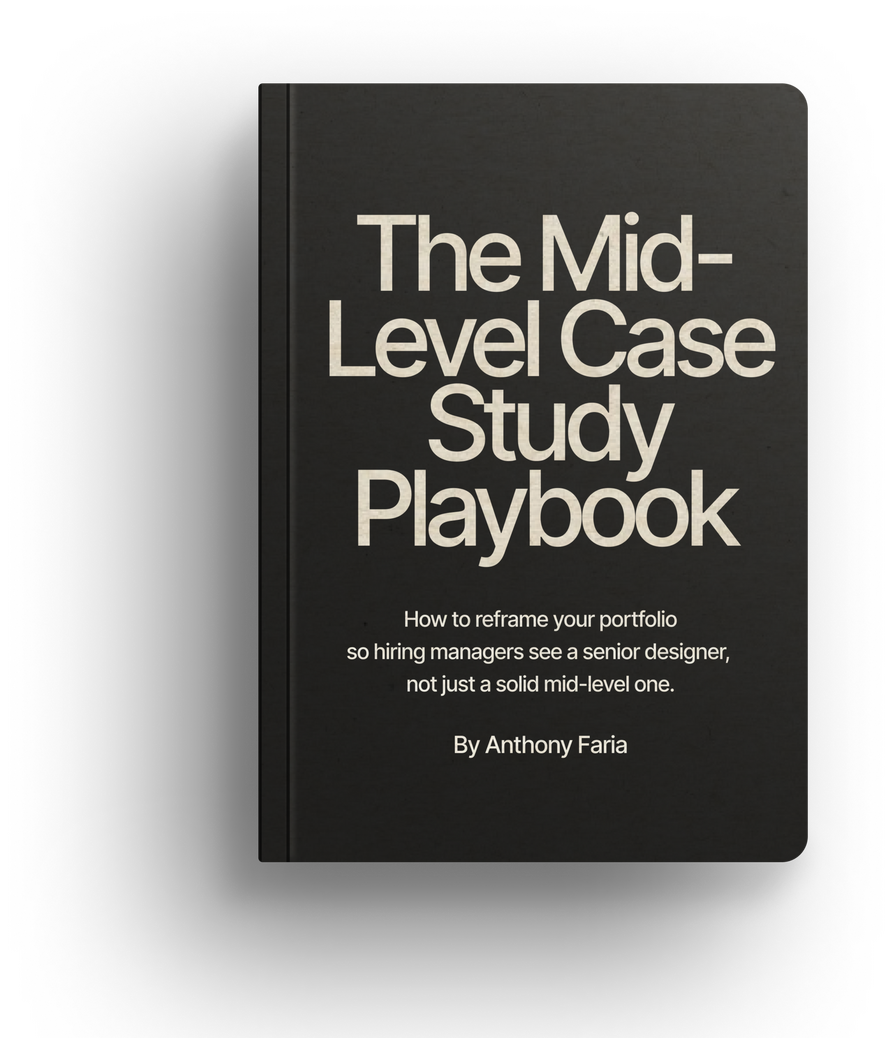
The Mid-Level Case Study Playbook.
How to reframe your portfolio so hiring managers see a senior designer not just a solid mid-level one.
After 25 years in the industry as a designer, hiring manager, and faculty member at Pratt Institute, I've reviewed hundreds of portfolios at every level.
The same pattern shows up constantly with mid-level designers: the work is solid but the portfolio quietly works against them. Not because of talent. Because of how the work is being communicated. This is the guide I wish I had as a mid-level designer.
The Mid-Level Case Study Playbook walks you through the five most common mistakes I see in mid-level portfolios and shows you exactly how to fix them using work you already have.
No rebuilding from scratch.
No new projects needed.
What's inside
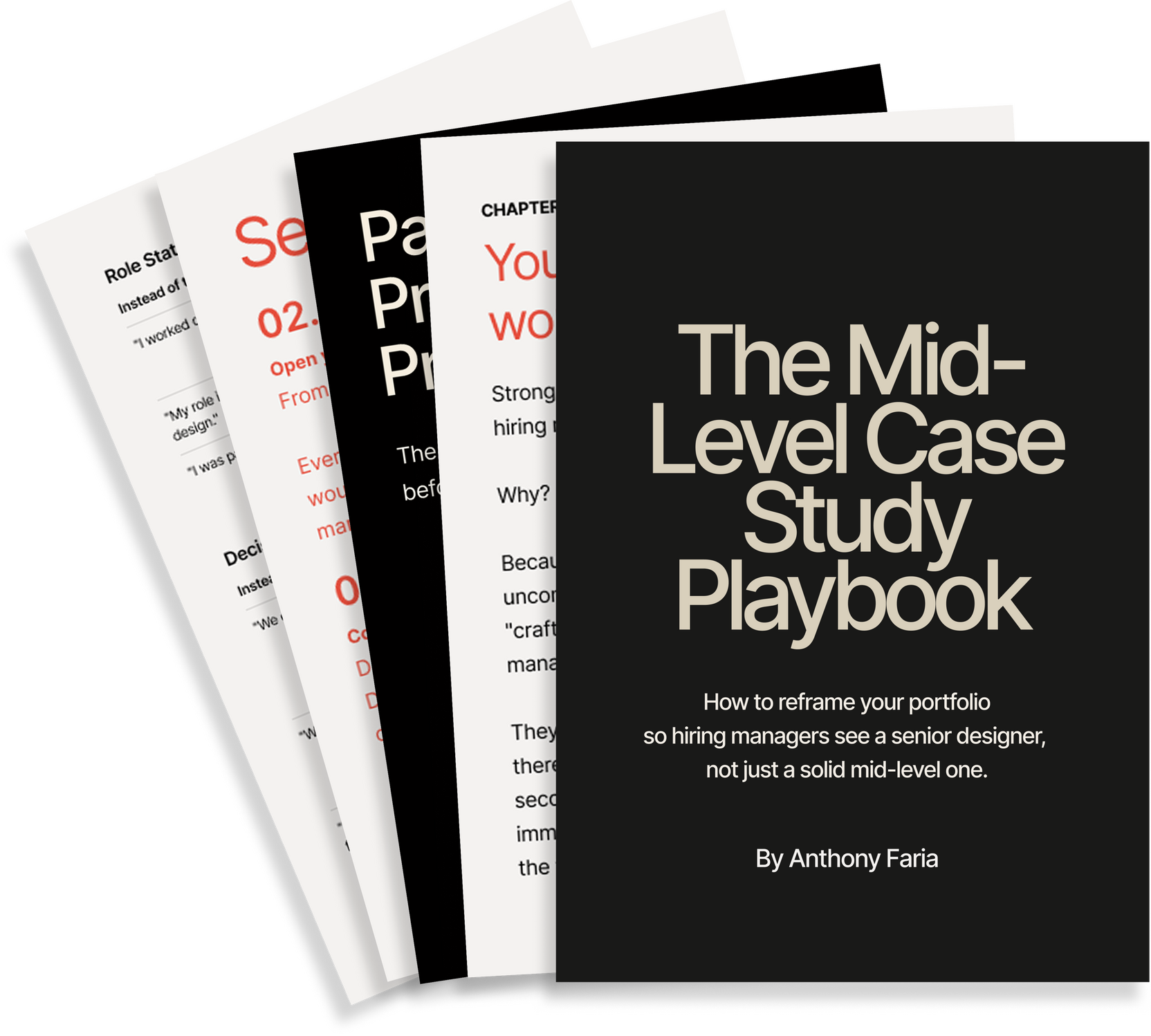
The PDF Guide
Five chapters (37 pages) covering the specific presentation and storytelling problems that cause strong designers to get overlooked — with a concrete fix for each one.
Chapter 1: Your template is working against you
Chapter 2: If your images are hard to see, your work is hard to trust
Chapter 3: Your case study has no story arc
Chapter 4: Nobody knows what you actually did
Chapter 5: Your story doesn't have an ending
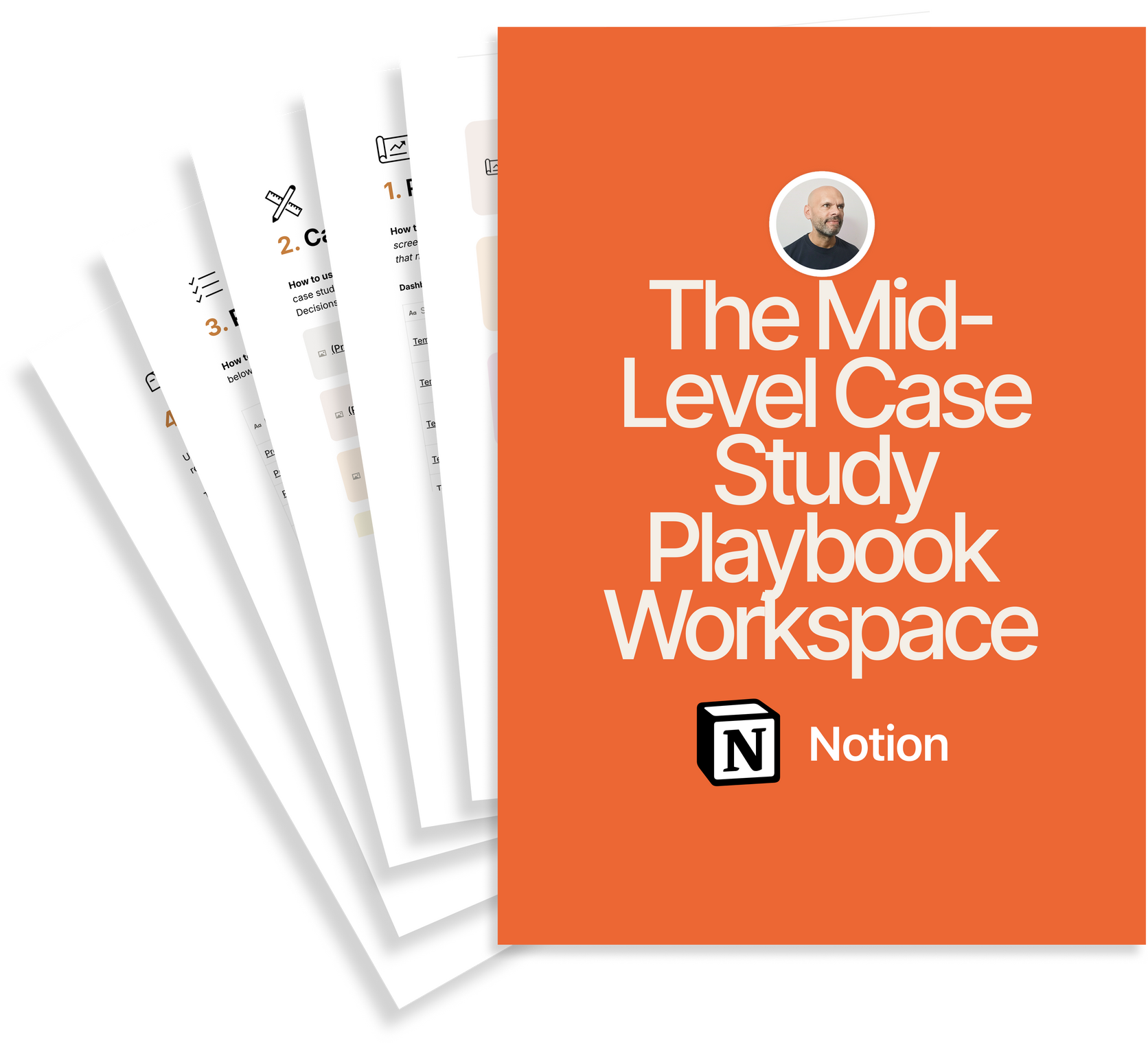
The Notion Workspace
A complete toolkit to audit, rewrite, and track your portfolio work:
Portfolio Audit Dashboard — checklist to identify exactly what needs fixing
Case Study Builder — a template to rewrite each project using the guide's framework
Portfolio Scorecard — rate each case study across five areas
Outreach Tracker — chase down results data from former colleagues and PMs
Bonus Job Tracker — manage your applications in one place
After purchase you'll receive an email with your PDF download link and Notion workspace access.
This is for you if:
• You're a mid-level designer applying for roles and not getting the traction you expect.
• You're employed but preparing to make a move to something better paid or more rewarding.
• You've looked at your portfolio and thought this should be enough. Why isn't it landing?
★★★★★
"My callback rate doubled after Anthony's audit."
- Designer's Roadmap client
After purchase you'll receive an email with your PDF download link and Notion workspace access.

About Anthony
Anthony Faria is a designer, mentor, and faculty member at Pratt Institute with 25+ years in the industry. He has coached 500+ designers through career pivots, portfolio rebuilds, and job searches. He writes Designer's Roadmap, a weekly newsletter read by designers at every level.
FAQs
Is this a physical book?
No, this is a digital PDF guide and a Notion workspace delivered instantly after purchase.
Do I need a Notion account?
Notion is free to sign up for. You'll receive a link to duplicate the workspace directly into your account.
What if I'm not a mid-level designer. Is this still useful?
The guide is built around mid-level portfolio challenges but the frameworks apply to any designer who wants their case studies to communicate more clearly.